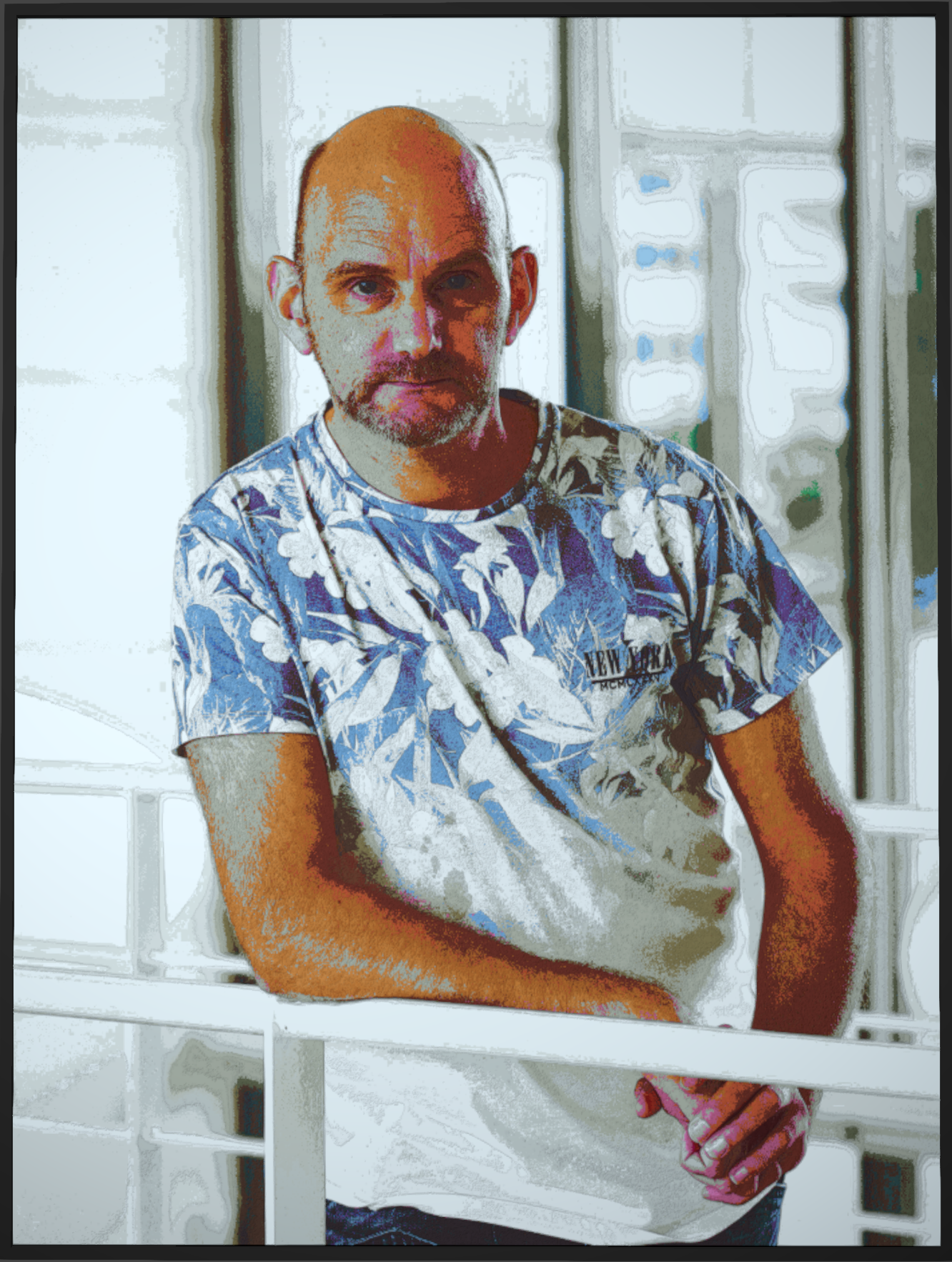
A 3D lithophane is a physical, translucent panel that reveals a hidden photographic image when light shines through it from behind. Instead of ink or paint, the image relies entirely on varying thickness: dark areas are thick to block light, and bright areas are thin to let light pass through.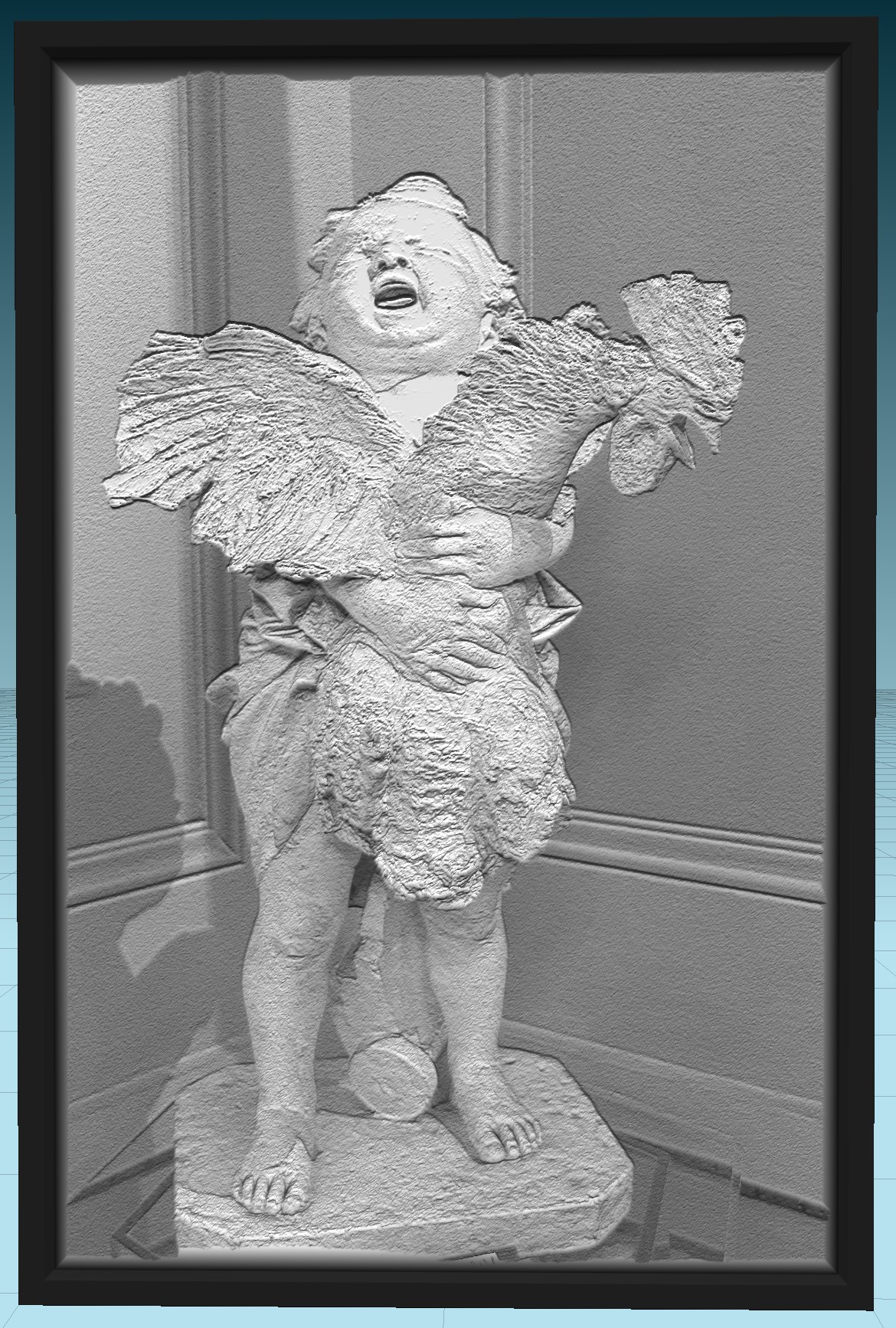
How Lithophanes Work.
- Light and Shadow/Color: Thin sections appear bright white because light passes freely, while thick sections appear dark or black because they block the light.
History and Modern Creation.
- Origins and Technique:
- Origins: Invented in Europe during the 1820s and patented in France in 1827 by Baron Paul de Bourgoing, the art form spread rapidly across major European porcelain factories through the 19th century.
- Etymology: The name “Lithophane” comes from the Greek words litho (“stone”) and phainen (“to cause to appear”).
- Hand Carving: Early artisans meticulously scraped and carved designs into white beeswax, working with a light source behind the wax to gauge thickness.
- Molding and Firing: Plaster molds were cast from the wax, into which moist porcelain paste or slip was pressed, then fired in a high-temperature kiln at around 1,093°C.
- Rise and Decline in the 19th Century:
- European Centers: Major porcelain manufacturers adopted the technique, led by the Royal Porcelain Factory (KPM) in Berlin, Meissen, and Sèvres, alongside English makers like Minton.
- Common uses: People hung delicate panels in windows, integrated them into lampshades, or embedded them at the bottom of beer steins and tankards.
- Decline: Popularity waned toward the late 19th and early 20th centuries as industrial printing and photography advanced.Origins: The art form started in 19th-century Europe (around the 1820s in France), where artisans meticulously hand-carved or molded thin sheets of porcelain.
- Modern Revival:
- 3D Printing Revival: Today, software tools convert pixel brightness values from digital photos into depth maps, generating an STL file that hobbyists can 3D print using white or translucent materials like PLA plastic.
- Contemporary styles: Modern makers produce flat panels, cylindrical lampshades, and illuminated LED light boxes.
How They Are Made.
- Digital Conversion: A regular digital photo is uploaded to a specialized Lithophane Maker tool that converts image brightness into a 3D relief model. For color, software splits the image into CMYK color channels.
- Multi-Color 3D Printing: Using an advanced multi-material 3D printer (like an FDM printer with an AMS (Automatic Material System) or multi-extrusion setup), the machine prints precise, ultra-thin stacked layers using translucent colored filaments.
- Backlighting: The finished plastic piece is mounted into a frame, nightlight, or lamp housing that shines an even white LED light through the rear. Grayscale models can also be placed against the windows, but then will be visible during daylight.
Black and white (B&W) lithophanes are sharper than CMYK color lithophanes
- This is because of physical limitations in how 3D printers handle light transmission, layer stacking, and orientation.
- While a B&W lithophane relies on a single material to block or pass light, a CMYK lithophane must layer multiple translucent colored filaments on top of each other. This layering introduces light bleeding and hardware restrictions that soften the image.
- Orientation and Layer Height vs. Nozzle Width
- B&W Lithophanes (Printed Vertically): Monochromatic lithophanes are typically printed standing upright on the build plate. Because they stand vertically, their level of detail is dictated by the printer’s layer height (often 0.08mm to 0.12mm).
- CMYK Lithophanes (Printed Flat): CMYK color lithophanes are almost always printed flat on the print bed to avoid thousands of slow, wasteful filament changes. When printed flat, the image’s detail is limited horizontally by the nozzle diameter (typically 0.4mm). A 0.08mm vertical layer edge is fundamentally sharper than a 0.4mm horizontal line width.
- Light Bleeding and “Subtractive” Subsurface Scattering
- In a B&W print, light passes through a single uniform material (like white PLA or PETG). The light paths remain relatively direct, preserving crisp borders between highlights and shadows.
- In a CMYK print, light must fight its way through varying thicknesses of Cyan, Magenta, Yellow, and White/Black layers. As light travels through these multiple distinct layers of translucent colored plastic, it bounces around laterally inside the plastic—a phenomenon called subsurface scattering. This internal scattering causes colors to blend and “bleed” across boundaries, resulting in a soft, dreamy, or slightly blurry look rather than a magazine-sharp edge.
- Spatial Resolution Reductions in Slicing
- To mix colors properly through transparency, the specialized software generating the STLs (like Lithophane Maker or Luban) often has to downscale the color data. The color resolution is lowered to ensure that the individual toolpaths don’t become too microscopic for a 3D printer to physically execute, resulting in an inherent loss of fine detail compared to a pure high-contrast grayscale map.
| Feature | B&W Lithophane | CMYK Lithophane |
|---|---|---|
| Primary Print Orientation | Vertical (Standing) | Flat (On Bed) |
| Primary Detail Driver | Z-axis layer height (~0.08mm) | X/Y-axis nozzle width (~0.4mm) |
| Material Layers | Single uniform filament | Stacks of 4+ colored filaments |
| Visual Output | High-contrast, crisp edges | Soft, blended, painting-like look |
Example to see the difference in sharpness
In the example below, you can clearly see the difference in sharpness between a CMYK and B&W lithophane.
From top to bottom: the original picture, the CMYK lithophane, and the B&W lithophane.